Written analysis/Marketing
AI was supposed to make brands irrelevant. Data says the opposite.
On the latest Media Unfiltered podcast we spoke to Shane Skillen about AI shopping assistants, media plans that lean towards the companies that built the AI, the creator gold rush, and whether TV can win the argument.
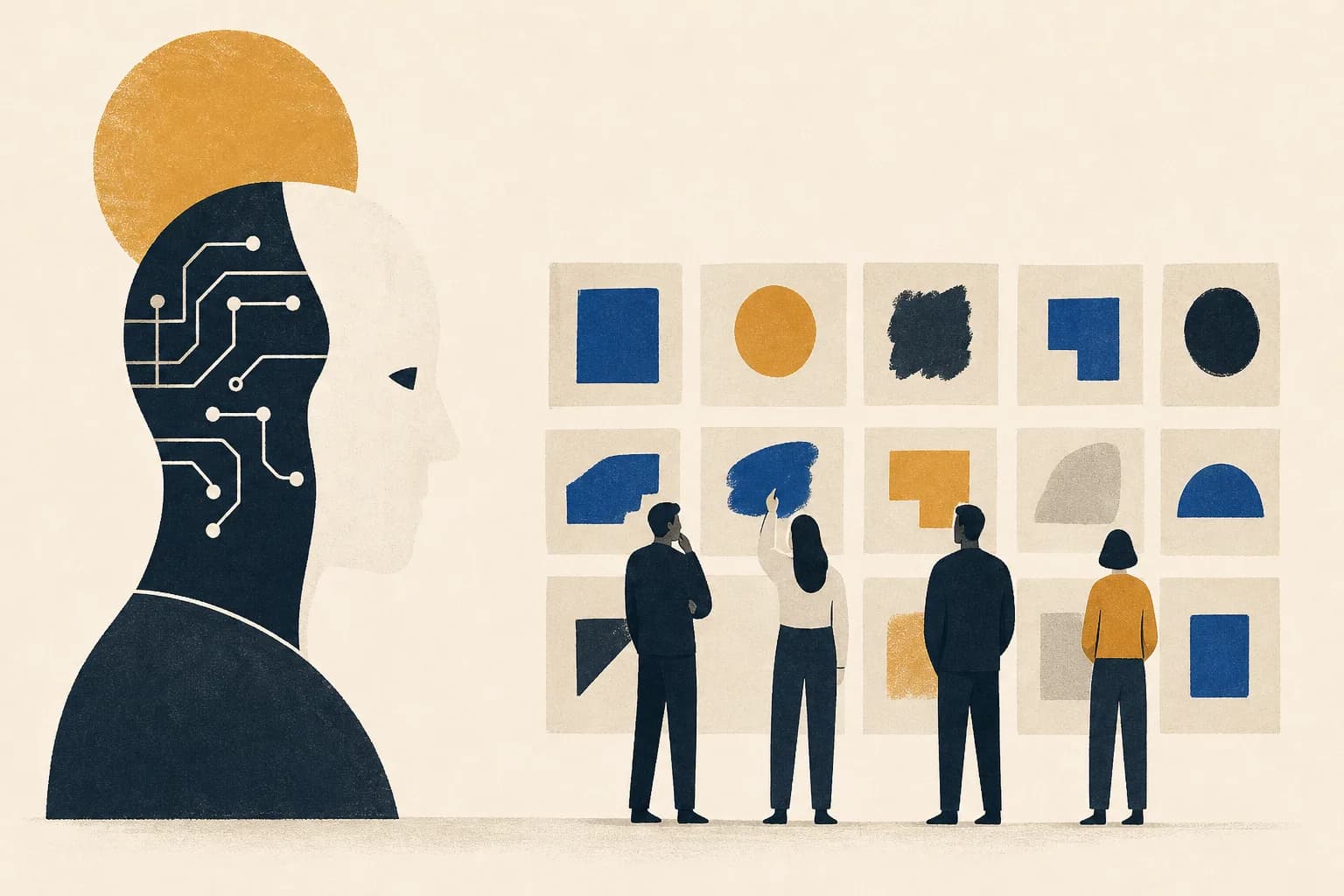
Shane spends his days helping Fortune 100 brands, P&G among them, stay consistent at a time when AI lets anyone in an organisation churn out ads, content and plans. He calls the goal "singularity". The enemy is fragmentation. That made him the right person to ask the question the whole industry is circling: if AI assistants start doing the shopping, do brands still matter?
His answer is yes, more than ever. Here's what stood out.
Strong brands beat the bot
Hotspex asked 500 people how they felt about five banking brands. It then simulated a ChatGPT recommendation for each of them, for example "use RBC for your credit card" or "use EQ Bank", and measured who overrode it.
71% of consumers with a strong emotional connection to a brand ignored the AI's recommendation. The flip side is the worrying bit. In a category full of weak brands, people take whatever the machine suggests, and those brands "become at the mercy of the recommendations from these LLM platforms".
Shane's view is that this suits the platforms nicely. Meta is pulling product catalogues onto its own platform so the purchase happens inside Meta, which then takes the credit and boosts its ROAS. "Meta and Google, they don't care about brand building, they care about profit maximisation. In fact, weaker brands are beneficial to them."
Ask an AI for a media plan and watch where the money goes
Shane's team asked an AI to build a plan for a quick-service restaurant brand with a $10m budget, set up to maximise ROAS and short-term sales lift.
- Basic prompt: 57% of the budget went to Google, Meta and Amazon.
- Same prompt, plus "use proven econometrics, IPA evidence and my marketing mix model": TV and out of home rose to 38%, and the platforms' share fell to around 20%.
- Claude put 21% into TV. Gemini, owned by Google, put 6% into TV and recommended YouTube heavily.
Why? Shane reckons there is around 100 times more effectiveness data for digital channels than for TV, radio and out of home in what these models were trained on. And they are closed models that can be tuned. As he put it, it's "not too far-fetched" to imagine a line in a model's instructions telling it to favour its owner's properties.
This matters now, not in five years. Shane cited a Futuri study finding that 63% of media buyers already use AI to plan media, and the holding companies' own platforms run on the same underlying models.
His advice: brands should ask their agency directly how the plan was built, and whether it uses proven econometrics and the brand's own MMM. Traditional media needs to publish far more effectiveness evidence so the models learn from it.
"No human will touch a media plan"? Not so fast
I put Brian Lesser's prediction to Shane: within five years, no human will touch a media plan. He thinks AI will look like it is doing a brilliant job of putting the right ad in front of the right person at the lowest price. That is exactly the risk. The models carry bias, agencies are under pressure on cost, and Meta and Google would love to go direct to brands. Shane recalled Mark Zuckerberg's line: give me your products and your bank account and I'll fill it up for you.
His conclusion was to keep a human in the loop to audit the AI, and to avoid "AI psychosis", where the industry simply trusts the model. I'd add that the black box is already here. Performance Max and Advantage+ are how those businesses have grown.
The creator gold rush: have we gone too far?
Unilever is moving half its media spend to creators and now works with 300,000 of them, up from 30,000. Shane's playbook for making that work is strict:
- brief creators on the emotions you share with them;
- use distinctive brand assets in the first few seconds;
- say the product's reason to believe the same way, every time;
- pay creators bonuses for sticking to all of that.
The last point isn't just about consistency. AI assistants are training on all this content. If 100 creators describe your product 100 different ways, the assistant gets confused and won't recommend you.
I pushed back here. Attention is driven by the platform, not just the content, and a creator ad can be flicked away in a split second. Brands then become dependent on a handful of algorithms. The long tail of creators feels a lot like early programmatic. Shane agreed the industry has gone "a little bit too heavy" on creators. He sees TV as the tentpole, the North Star everyone sees, with creators adding reach on top. One striking point: follower counts barely matter any more, because the platforms' AI decides who sees each piece of content.
Will creators kill TV advertising?
Shane's answer was honest: "TV has got a fight here." He made two points. First, the people buying media watch far less TV than the people they are buying it for, so they underestimate how many people still watch it. Second, TV's real weakness is proof. Meta, Google, Amazon and TikTok hand over reports linking spend to sales, which is what CFOs want to see. The brief to agencies is almost always "get us cheap ads that convert". His verdict: creators will make "a big dent" in TV advertising.
Brand in five years: more important, not less
With junior marketers now able to produce content, ads, media plans and strategies at the press of a button, someone has to hold it all together. Shane quoted Mark Ritson's point that marketing is product, price, place and promotion, and that marketers have become advertisers. The opportunity is for marketing to become the thing that organises the whole company again.
Shane's resources and charts for Media Unfiltered listeners: [https://shaneskillen.com/justin/#listen]

Marketing
All the problems with modern marketing - with Les Binet
When you look at The Long and the Short of It — now over a decade old — it outlines a 60/40 split between brand and performance. That’s a guideline, and for many…
10 Jul 2025 · 2 min
Marketing
Are we better at marketing today than we were in the past?
At Cannes, the conversation often came back to the stark contrast between the thoughtful debates happening in the Palais and the ad-tech dominance on the beaches…
8 Jul 2025 · 1 min
The Newsletter
Never miss a piece
A short note in your inbox when a new episode or piece lands — the argument, the data and where to find it. No noise.