YouTube now accused of streaming pirated content — and possibly profiting from it.
That’s according to an article in The New York Times, based on a new Adalytics report. Google admits in the piece: “mistakes happen.” But why do we, as an industry…

That’s according to an article in The New York Times, based on a new Adalytics report. Google admits in the piece: “mistakes happen.” But why do we, as an industry, continue to accept this? It’s immensely frustrating — and the report reveals so much more.
Their response? In my view, underwhelming. Claiming Adalytics is “just after business.” (Brilliant. DV tried that one too. So did TAG.) NYT journalists independently fact-checked and reproduced it on their own. This is why I keep pressing major media voices like Evan Shapīro to challenge platforms like YouTube on their claims and push for transparency — rather than simply cheerlead and encourage broadcasters to upload their libraries of content.
Recently, YouTube quietly changed how it counts a “view”, then got criticized for promoted inflated numbers off the back of that shift. That too went unchallenged. Advertisers are being sold a narrative that sounds stronger than the reality.According to Adalytics, YouTube also served ads alongside content that violated its own policies — and didn’t refund advertisers. That’s not a good look. I’ll share more on the report’s specifics later this week.
Why does this matter? Because YouTube is going hard after TV ad dollars. It now holds a 6–8% share of TV viewing outside the U.S. — a stat that’s broadly consistent across markets. As broadcasters upload more content to the platform, those figures will climb — and advertisers will follow. Broadcasters could be strengthening YouTube’s sales pitch — without necessarily benefiting themselves.AND - the jury’s still out on whether broadcasters can actually make money on YouTube. Many are trying.
Most are struggling.TV, by contrast, remains one of the few highly regulated video ad environments where you can trust the content is brand-safe — and advertisers pay when a real human watches an ad to completion. (I'm not saying it's perfect but that's the aim and it generally works. And no, I don’t mean the murky long-tail CTV space bought through non-transparent pipes.)
Let me be clear: I think YouTube can be a force for good. I don’t know where I’d be without it — helping my son and I complete a Black Ops Zombies map, fixing a 10-year-old washing machine, or figuring out a complex video rig. It’s brilliant. Which is exactly why this nonsense is so unnecessary. I'd love it to play in the small pool as TV.
I’m not anti-YouTube. I’m anti-skullduggery.
TV
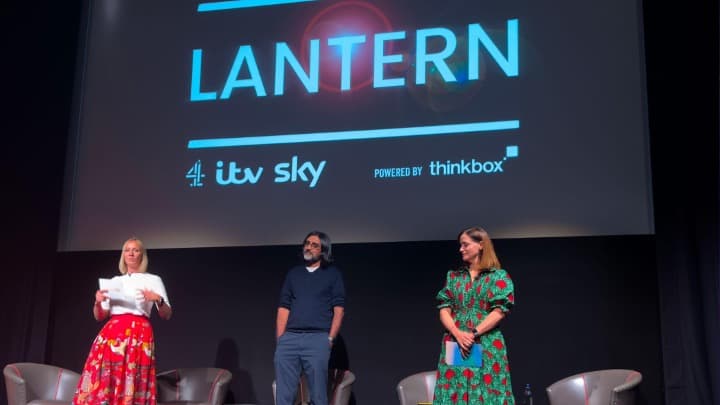
Lantern - Everything you need to know and why I think it’s exceptional
Lantern is, simply put, an outcomes-based measurement solution created by three of the UK’s major commercial TV companies — Sky, ITV and Channel 4.
24 Sept 2025 · 4 min

TV
Five Years to Fix It: Why Canadian TV Can’t Afford Inertia
The day began with a critical examination of the effectiveness crisis in Canada. It's been brewing for a while: spend per capita here is much lower than in other major…
16 Sept 2025 · 5 min
TV
ITV's Kelly Williams On Why UK TV's Growth Story Is Just Getting Started
In this interview with Kelly Williams, MD Commercial at ITV, we discussed how the UK’s largest commercial broadcaster plans to continue growing following some very…
29 Jul 2025 · 1 min
The Newsletter
Never miss a piece
A short note in your inbox when a new episode or piece lands — the argument, the data and where to find it. No noise.