Written analysis/Marketing
"The performance of performance marketing is governed by brand": James Hurman's case for balance
In most categories, more than 70% of buyers aren't in the market today, and 84% of purchases go to a brand the buyer already had in mind before they started looking. James Hurman explains why that makes brand and performance a love story, not a budget fight.
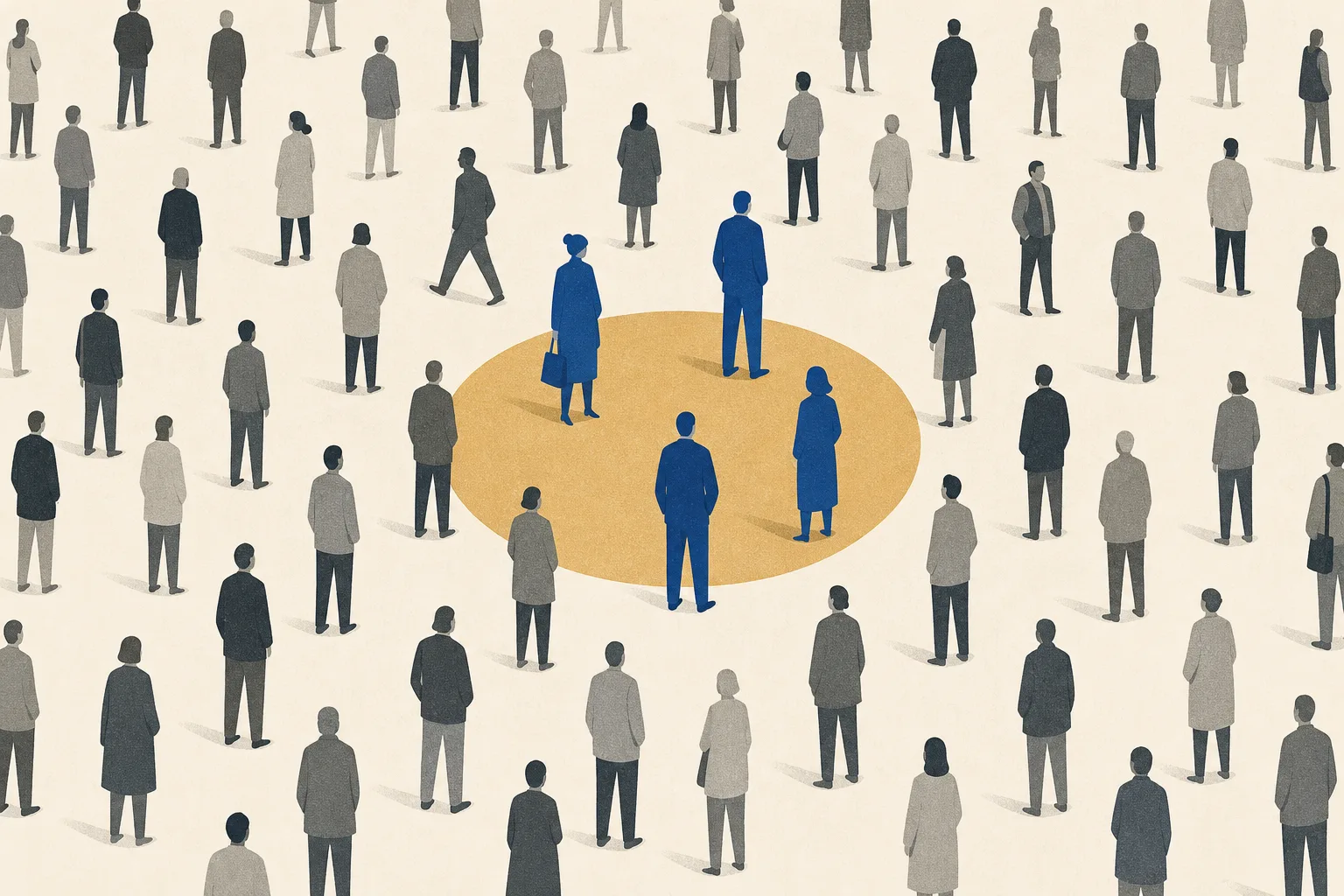
Three quarters of marketers say they're getting diminishing returns from their performance marketing. Two thirds say their campaign dashboards look like a success while the business doesn't grow.
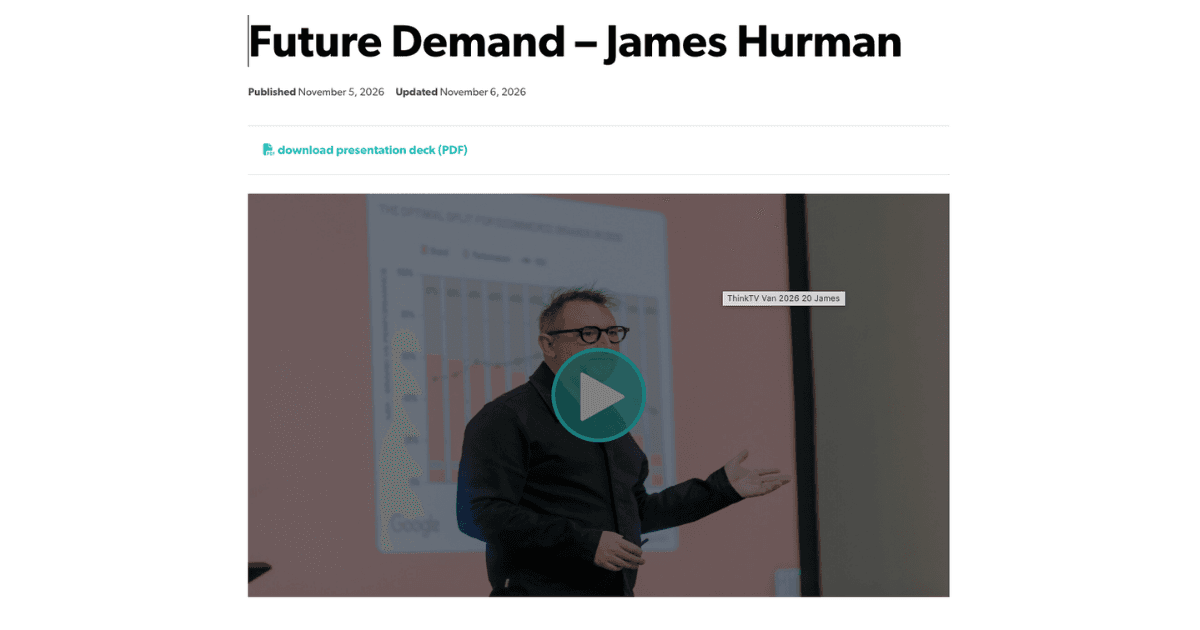
That was how James Hurman opened his talk at thinkTV Canada on 28 October. James, the New Zealand strategist behind brand tracker Tracksuit, has a new book, Future Demand, about how brand marketing and performance marketing fit together. "Spoiler alert," he said, "it's a love story." Here's what stood out.
Every study comes back to roughly half and half
James went through the evidence. In Google's study of e-commerce brands, overall ROI peaked when spend was split roughly evenly between brand and performance. It fell if the split tilted too far either way. Analytic Partners found that companies spending 100% on performance grew incremental revenue far more slowly than those with a 50/50 split. BCG found much the same. Les Binet and Peter Field's The Long and the Short of It (2013) put the best split at about 60/40 in favour of brand. A study of the US PIMS database said the same in 1992.
"There's not a study that shows that companies that spend more on performance do better," he said. "That doesn't exist."
"Advertising actually doesn't cause sales. But it does ensure brands win a greater share of them."
james hurman
James splits every category into current demand (people ready to buy now) and future demand (people who will buy at some point). His US research shows the same pattern in every category. For smartphones it's 15% current and 85% future. For trainers it's 26/74, for international flights 19/81, for beer 37/63, and for recreational cannabis 31/69.
Most of your market isn't buying today
Future demand matters because buying decisions are mostly made before someone enters the market. Research by WPP Media and Oxford's Saïd Business School tracked 1.2 million purchase journeys. In 84% of them, the buyer chose a brand that was already on their shortlist before they started shopping. Only 16% of the time did an ad win over someone who hadn't been considering the brand.
Brand decides how well performance marketing works
This was the most useful data in the talk. Tracksuit combined its brand-tracking data for hundreds of brands with TikTok's performance data. They found no link between brand awareness and click-through rate: a good piece of content gets clicks whether or not anyone has heard of the brand. James was blunt about what that means: "Click-through rate is a bullshit metric. If you track it, stop it."
Conversion is different. TikTok's marketing science team found a strong link between awareness and conversion rate. A brand with 60% awareness converts at roughly three times the rate of one with 20%. As James put it, "The performance of performance marketing is governed by brand marketing."
Advertising doesn't cause sales. It wins a bigger share of them
Most ads convert about 1% of the people who see them, 5% in good cases and 15% at the very best. According to James, those figures haven't changed in a century. Either the industry is incompetent, he said, or it has the wrong idea of how advertising works. AIDA (awareness, interest, desire, action) was first written as a model of personal selling, and advertising borrowed it later.
His alternative: people come into and leave categories naturally. Advertising's job is to make sure your brand wins more of the sales that happen. Volvo Trucks' "Epic Split" with Jean-Claude Van Damme is his example. It got 100 million views, sales rose 24% in the first year, and Volvo Trucks was still setting market-share records in 41 countries in 2022. Almost no viewers were buying trucks, but it reached everyone who would buy one later.
Creativity, emotion and reach
To build future demand, James's recipe has three parts:
- Creativity, because people who aren't in the market ignore ads unless something catches their attention. IPA data shows creatively awarded campaigns are around seven times more efficient at growing share over time.
- Emotion, because the brain forgets facts quickly but remembers feelings for much longer (Robert Heath's research on memory). There's a profit argument too. When people like a brand, they think its price is lower than it is. A 1% price rise on a 5% margin takes it to 6%, which is 20% more profit. In James's own New Zealand data, humour was the strongest predictor of an ad growing profit. Influencer marketing came out negative for profit: "You're renting the talent of an influencer rather than building value into your own brand."
- Reach, through broadcast. James cited Thinkbox's research that the same ad seen on TV makes people rate the brand as higher quality and more trustworthy than it does on digital. He also cited Karen Nelson-Field's attention research: an ad needs about 2.5 seconds of attention to be remembered. TV viewers watch the whole ad; digital viewers skip.
Click-through rate is a bullshit metric. If you track it, stop it.
James hurman
The companies that "don't advertise" spend billions on it
James debunked the idea that modern tech companies grew without advertising. On his figures, Amazon and TikTok each spend about $20 billion a year, and Google about $8 billion.
He then compared two companies. According to James, Airbnb moved spend from search and social towards brand, and its CFO credited the change with the company's move into profit. Nike went the other way. It copied Hoka and On with influencer and direct-to-consumer marketing, and in 2024 was ranked the top US fashion brand for influencer marketing. In the same year, James said, its profit and share price fell sharply and the CEO left. His summary: "If you market like a smaller brand, you will become a smaller brand."
The CFO Issue
He thinks marketers lose the CFO/CEO argument because they explain it badly. His one-sentence answer to "how does brand add commercial value?" is this: brand marketing makes people who aren't in the market yet familiar with us and emotionally positive towards us, so when they enter the market they gravitate towards us and pay more for us.
My take
The structure is the strongest part of James's argument, and it's one a finance director can follow. Some of the case studies need more caution. Nike's problems involved product, wholesale and leadership as well as its media mix, and the Airbnb story relies on the CFO's own account. But the awareness-to-conversion data is hard to argue with. For anyone selling brand to senior execs, the line to remember is that the performance of performance marketing is governed by brand.
He finished with an old advertising story. A man buys an Aston Martin because of an ad, and the twist is that he saw it when he was 14. The point: half of marketing's job is to win sales that haven't happened yet.
If you market like a smaller brand, you will become a smaller brand
james hurman

Marketing
All the problems with modern marketing - with Les Binet
When you look at The Long and the Short of It — now over a decade old — it outlines a 60/40 split between brand and performance. That’s a guideline, and for many…
10 Jul 2025 · 2 min

Marketing
Are we better at marketing today than we were in the past?
At Cannes, the conversation often came back to the stark contrast between the thoughtful debates happening in the Palais and the ad-tech dominance on the beaches…
8 Jul 2025 · 1 min
Marketing
AI was supposed to make brands irrelevant. Data says the opposite.
On the latest Media Unfiltered podcast we spoke to Shane Skillen about AI shopping assistants, media plans that lean towards the companies that built the AI, the creator gold rush, and whether TV can win the argument.
25 Oct 2026 · 4 min
The Newsletter
Never miss a piece
A short note in your inbox when a new episode or piece lands — the argument, the data and where to find it. No noise.